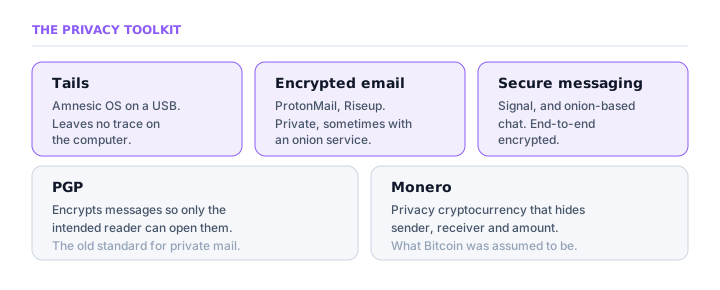
The main dark web privacy tools are: Tails, an amnesic operating system that leaves no trace; encrypted email like ProtonMail and Riseup; secure messaging like Signal; PGP for encrypting messages; and Monero, a privacy cryptocurrency that hides sender, receiver and amount. For ordinary reading, Tor Browser alone is enough — this toolkit matters for genuine high-stakes privacy needs.
- Tails: amnesic OS that leaves no trace, routes through Tor
- ProtonMail and Riseup: encrypted email, sometimes via onion
- Signal and onion chat: end-to-end encrypted messaging
- PGP: encrypts messages so only the reader can open them
- Monero: privacy cryptocurrency hiding sender, receiver, amount
Beyond the Tor Browser, a small toolkit of privacy software comes up repeatedly in dark web contexts. None of it is exotic, and most has entirely legitimate uses. Here's what each tool does and when it actually matters.
Tails
Tails is an amnesic operating system that runs from a USB stick and leaves no trace on the computer it's used on. It routes everything through Tor by default and forgets everything on shutdown. It's used by journalists and activists who need a clean, traceless environment — overkill for casual reading, essential for high-stakes work.
Encrypted email
ProtonMail and Riseup provide encrypted email, sometimes with an onion service so they're reachable even where blocked. They keep your communications private from providers and, in Proton's case, from the service itself.
Secure messaging
Signal is the gold standard for end-to-end encrypted messaging on the ordinary internet, and various onion-based chat services exist for anonymous contact. These protect the content of your conversations and, in some cases, who you're talking to.
PGP
PGP (Pretty Good Privacy) encrypts messages so only the intended reader can open them. It's the old standard for private email and the mechanism markets use for order details — and where many users slip, by skipping it or reusing keys.
Monero
Monero is a privacy cryptocurrency that hides sender, receiver and amount by default — the actual privacy money that Bitcoin was assumed to be. It has legitimate privacy uses and is why regulators watch it closely.
For ordinary reading, Tor Browser alone is enough. This toolkit matters for people with genuine high-stakes privacy needs — journalists, activists, whistleblowers — not casual visitors.
Frequently asked questions
What is Tails?
An amnesic operating system that runs from a USB stick, routes everything through Tor by default, and leaves no trace on the computer. It's used by journalists and activists who need a clean, traceless environment for high-stakes work.
What privacy tools are used with the dark web?
Beyond Tor Browser: Tails (amnesic OS), encrypted email like ProtonMail and Riseup, secure messaging like Signal, PGP for encrypting messages, and Monero for private payments. Most have legitimate mainstream uses.
What is PGP?
Pretty Good Privacy — encryption that scrambles a message so only the intended reader, holding the matching key, can open it. It's the old standard for private email and the method dark web markets use for order details.
Do I need special tools for the dark web?
For ordinary reading, no — Tor Browser alone is enough. The wider privacy toolkit (Tails, PGP, Monero) matters for people with genuine high-stakes needs like journalists and activists, not casual visitors.
Is Monero a privacy tool?
Yes. Monero is a cryptocurrency that hides sender, receiver and amount by default, unlike traceable Bitcoin. It has legitimate privacy uses and is closely watched by regulators for exactly that reason.