Tor itself provides strong anonymity: traffic is encrypted in layers and relayed through at least three nodes, so no single server sees both the user's IP address and the destination. However, people are deanonymised regularly, almost always because of operational mistakes rather than flaws in the protocol. Common errors include reusing the same username or email address across anonymous and personal accounts, posting original photos or documents with EXIF/GPS metadata, enabling JavaScript or browser plug-ins that leak real IP addresses, connecting to personal accounts or logging into social media over Tor, and downloading files that fetch content outside the Tor network. Law enforcement typically identifies suspects by correlating those mistakes, purchasing from or infiltrating the same marketplaces, following cryptocurrency payment trails, or seizing servers that were misconfigured — not by breaking Tor's encryption.
- Tor makes tracking very hard — the maths holds
- People are caught through their own mistakes, not broken Tor
- Reused identities, personal details, and downloads are the usual causes
- Police usually follow the money or exploit errors, not the network
- Your ISP can see you use Tor, but not what you do
Can you be tracked on the dark web? The honest answer sits between the two extremes people usually hear. Tor's anonymity is genuinely strong — the maths holds — but people are deanonymised regularly, almost always because of their own mistakes rather than any flaw in the network.
What Tor hides
Tor routes your traffic through three relays so no single point knows both who you are and where you're going. The site sees a Tor exit, not you; your ISP sees Tor, not your activity. For most people, this provides strong, real anonymity.
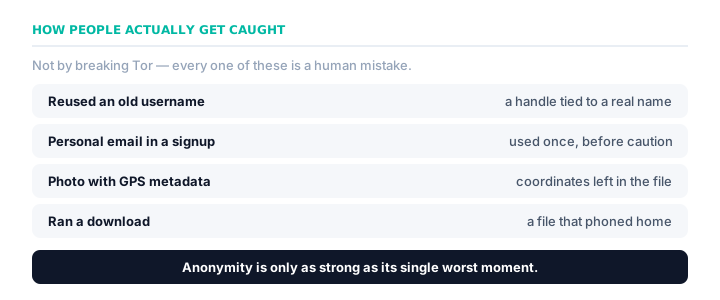
How people actually get caught
Deanonymisation almost never comes from breaking Tor's cryptography. It comes from the user: reusing an old username tied to a real identity, entering a personal email in a signup, leaving GPS metadata in a photo, or running a download that connects outside Tor. Anonymity is only as strong as its single worst moment.
Can the police or FBI track you?
Law enforcement has unmasked Tor users and taken down major operations — but almost always by exploiting a mistake, seizing a misconfigured server, following the cryptocurrency, or running an operation, not by breaking Tor. A traffic-confirmation attack on the network is real but expensive, and generally viable only for a well-resourced state against a specific, already-suspected target. For anyone not individually targeted, the network holds up well.
Does your ISP see that you use Tor?
Usually yes. Because the guard relay's address is public, your ISP can see you connected to Tor — but not what you did. This matters only where using Tor is treated as suspicious, in which case a bridge disguises it.
The verdict
Tor makes tracking very hard, and for ordinary users it works. What determines your safety isn't the abstract power of any agency — it's whether you've given them a thread to pull. The network rarely fails; the human using it does.
Frequently asked questions
Can you be tracked on the dark web?
Tor makes tracking very hard by routing traffic through three relays. In practice, people are almost always identified through their own mistakes — reused identities, personal details, or downloads — not by breaking the network.
Can the police track you on the dark web?
Law enforcement has unmasked users, but almost always by exploiting mistakes, seizing misconfigured servers, or following cryptocurrency — not by breaking Tor. A traffic-confirmation attack is real but expensive and viable only against specific, already-suspected targets.
How do people get caught on the dark web?
Through their own mistakes: reusing an old username tied to a real identity, entering a personal email, leaving GPS data in a photo, or running a download that connects outside Tor. Anonymity is only as strong as its single worst moment.
Can your ISP see you use the dark web?
Your ISP can see you connected to Tor, because the guard relay's address is public, but not what you did. This only matters where using Tor is treated as suspicious, where a bridge can disguise it.
Is Tor really anonymous?
For most people, yes — it provides strong anonymity, and the network itself is very hard to defeat. But it protects the connection, not your behaviour, so revealing personal details or running downloads can undo it.